

CARDIAC MRI Simplified CONCISE GUIDE
₹625.00
Who Will benefit from this book? * Genuine interest in cardiovascular imaging * International certification exams * Enhancing skills in interpretations of cardiac MR Why this format? * Salient points, easier and faster to read. * Questions-answer approach for better understanding of topic. * Short and well contained guide. What are the highlights of the book? * Comprehensive coverage of all topics * Appropriate illustrations * Inclusion of recent advances
Related products
-

Textbook and Atlas of Dermatology 2nd Ed.
₹3,995.00Salient Features :
1) Comprehensive visual guidance you need to effectively evaluate, diagnose and manage all forms of skin disease. over 200 images richly depict etiology, clinical features, diagnosis and treatment, equipping you to provide the best care to every patient. 2) More than 40 chapters covering all dermatological ailments. 3) More than 200 illustrations from the Author’s personal database giving a unique overview of the diseases. 4) Hands – on clinical experience sharing in the form of cases, clinical presentations and management approach.
-

Puzzling Cases in Electrocardiography
₹775.0012 Lead Electrocardiography remains as clinically relevant now as when first introduced to clinical medicine decades ago. The value of 12 Lead ECG is mattering the ability to integrate the ECG findings into information provided by the history and Physical Examination. The book authored by Prof Rimmerman, one of the foremost Cardiologists in the world follows 50 ECG Case Studies purposefully chosen where the ECG made a clinical impact on the management of the patient
-
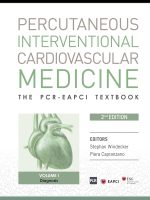
PCR-EAPCI Textbook – Percutaneous Interventional Cardiovascular Medicine – 4 Volumes 2/ed.
₹44,995.00Stay Ahead in Interventional Cardiology with the Definitive Reference Textbook!The PCR-EAPCI Percutaneous Interventional Cardiovascular Medicine Textbook is the ultimate, all-inclusive guide designed to keep interventional cardiologists at the forefront of their field. This first-of-its-kind resource delivers comprehensive, patient-centered, and evidence-based clinical guidance, covering the latest techniques and best practices. 120+ expert-led, illustrated chapters on coronary interventions, structural heart disease, and peripheral interventions. Covers everything an interventional cardiologist needs to know—from fundamentals to advanced procedures. A must-have reference for cardiologists, fellows, and healthcare professionals seeking cutting-edge knowledge. Key Topics Include: Foundations of Cardiovascular Medicine – General principles, physiology, and diagnostics.Cardiac Catheterization & Imaging – Hemodynamics, coronary physiology, and contrast agents. Percutaneous Coronary Interventions – Stenting techniques, complications, and management. Structural Heart Disease Interventions – TAVI, mitral and tricuspid interventions, and congenital defects. Peripheral & Stroke Interventions – Management of pulmonary embolism, arterial hypertension, and more. Cardiogenic Shock & Heart Failure – Ventricular assist devices and cutting-edge therapies. Clinical Research & Pharmacology – Biostatistics, health economics, and preventive cardiology. Editors: Stephan Windecker – Inselspital, University of Bern, Switzerland Piera Capranzano – University of Catania, Italy

-

Current Progress In Obstetrics & Gynaceology – Volume 6
₹1,225.00Volume 6 of Current Progress in Obstetrics and Gynaecology has been complied during the most challenging time of the Covid – 19 pandemic. In spite of the challenges that all of us have faced thrughout the world, the editors are delighted to produce a state-of-the-art volume on many of the important challenges in contemporary obstetrics and gyaecology. The first part of this volume addresses a spectrum of gynaecologic topics, including infertility, the special challenges of female athletes, early ovarian aging, diagnosis and management of adnexal masses, endoscopic surgery, minimising blood loss in surgery and diagnosing and managing gynaecologic complications. The second part of this volume deals with myriad of obstetric topics, including epigenetics, the hormonal transition int motherhood, maternal infections leading to congenital defects, the important of multidisciplinary care in managing foetal anomalies, the evolving antenatal management of congenital diaphragmatic hernia, the current approach to antepartum haemorrhage and the important role of ultrasound in the management of labour and delivery. The volume closes with the relevance of professional ethics to the clinical practice of obstetrics and gynaecology. The editors are grateful to all of the authors who have given their expertise selflessly at this difficult time and enabled this volume to improve the care of obstetric and gynaecologic patients throughout the world.
-

Current Progress In Nephrology Volume 1
₹1,500.00The aim of the book is to address the basic concepts and newer developments in selected areas of clinical nephrology, dialysis and renal transplantation. Selected topics on interest with reference to recent developments, updated classifications or advances in pathogenesis and treatment. Nephrologists from around the world have contributed to this one of its kind book.
-
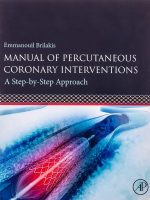
Manual Of Percutaneous Coronary Interventions A Step By Step Approach (Pb 2021)
₹9,715.00Manual of Percutaneous Coronary Interventions: A Step by Step Approach is a practical, easy to read reference guide on how to perform percutaneous coronary. Written by recognized experts in the field, this reference compiles the necessary steps, lists pitfalls to watch out for, and provides tactics on troubleshooting percutaneous coronary interventions. Written to bring a practical and easy to read approach, this book is perfect for interventional cardiologists, interventional and general cardiology fellows, cardiology researchers, physicians, cardiac catheterization laboratory personnel, technical staff, industry professionals and anyone interested in understanding the cutting-edge and rapidly evolving field of coronary PCI.
-

EMG Simplified
₹3,250.00ABOUT THE BOOK – A concise book for practical Electroneuromyography What is it for? Electrodiagnosticians Neurology trainees Neurology practitioners Orthopedic and hand surgeons Physicians Technologists COVERS Technical as well as neurological aspects Troubleshooting paradigms Approach based on presenting symptoms Disease based discussions Considerations about the common and the uncommon Case Studies
-

Puzzling Cases in Stroke Vol. 2
₹1,695.00Stroke is a treatable medical emergency affecting about 15 million people every year worldwide. It is the most common cause of common cause of disability globally and is the third most common cause of death. In the present times, there are effective treatment options which if given timely will benefit the patients of stroke remarkably. Therefore, correct diagnosis of acute stroke is extremely important for the clinicians to provide appropriate treatments and to ensure prevention of acute complications, including recurrent strokes. But sometimes a typical or uncommon presentation of stroke or “stroke chameleons”can lead to diagnostic dilemma. Therefore, timely diagnosis and management may be delayed. There are time – tested strategies which when strictly followed by the Neurphysician can reduce the chances of missing the correct diagnosis. Firstly, “Listen very carefully to the patient. He is telling you the diagnosis.” Clinicians should suspect stroke when the history suggests abrupt onset of neurological symptoms. Remember, Stroke is a clinical diagnosis and imaging is providing the corroboratory evidence. Secondly, a complete and systematic neurological examination should be routinely done in patients presenting with acute neurological symptoms because this might shed light on the true nature of the problem. Finally, even the most sophisticated neuroimaging tests might miss the stroke in the early hours after the event.