

GET THROUGH MRCOG PART 1 – 2/ED.
₹595.00
Get Through MRCOG Part I, Second Edition, Provides a Selection of questions covering the basic and applied sciences relevant to the clinical practice of obstetrics and gynecology and mapped to the RCOG Knowledge Areas in the MCQ style. With appropriate explanations of the answers and reference to the relevant guidelines , this is a definitive resource for those taking the MRCOG Part I examination. About the Authors – Rekha Wuntakal, MBBS, MRCOG, MD, DNB, DFFP, is a Sub specialist in Gynaecological Oncology and Consultant in Gynaecology and Gynaecological Oncology at Barking, Havering and Redbridge NHS University Hospitals, Romford UK. Ziena Abdullah MBBS, BSc, MRCOG, PGCert (Clinical Leadership) is a Consultant in obstetrics and Gynaecology at Barking, Havering and Redbridge NHS University atHospitals, Romford, UK Tony Hollingworth MB ChB, MBA, PhD, FRCS (Ed), FRCOG, is a Gynaecologist at Whipps Cross University Hospital/ Barts Health NHS Trust and Part-time Clinical Research Fellow at the Wolfson Institute for Preventive Medicine, QMUL, London, UK
Related products
-

Basic Science in Obstertrics and Gynaecology 5th/Ed. – The Textbook for MRCOG – Part I
₹1,995.00Training the next generation of obstetricians and gynecologists requires the provision of a strong foundation in the understanding of the basic science that underpins clinical practice. The MRCOG Part 1 examination has evolved to assess active participation of trainees in acquiring this fundamental scientific knowledge. The updated 2019 MRCOG syllabus and core curriculum acts as Scientific Platform for Clinical Practice, examining 15 core knowledge areas in four domains of understanding: Cell Function, Human Structure, Measurement and Manipulation and Understating Illness. Assessment has also been reformed to the format of single best answer (SBA) questions. This New edition has been updated with these adaptations to the MRCOG Part 1 examination in mind. We have brought in new editors and several new authors to update chapters. We have introduced a new chapter with self-assessment questions and answers, to reflect the revised examination format. We include 11 SBA questions per book chapter (17 for the anatomy chapter), and there mock exam papers. Included in this edition is a digital format to the book, to provide more flexibility in learning technique. We are grateful to the previous authors whose work formed the foundation of the current edition.

-

HANDBOOK OF DERMATOLOGIC DRUG THERAPY 2/Ed. Revised & Updated
₹1,495.00Dermatology is a branch of medicine which relies heavily on outpatient treatment and also managing several incapacitating diseases as inpatients. The load of patients in any dermatology OPD is ever increasing, thanks to the recent awareness about the dermatological diseases. The role of a Dermatologist is complicated and quite demanding with reference to innumerable diseases that he has to deal with. Added to this, he is also expected to be well versed with all the drugs that he prescribes, what with constant addition of newer drugs. It is humanly impossible to remember and recollect the various indications, dosages, formulations, side effects and mechanism of actions of all the drugs that he is suppose to use. Another perennial threat is that posed by drug interactions. Books available on this subject are either very exhaustive or less informative. Handbook of Dermatologic Drug Therapy is published is an attempt to bridge this gap. In this second edition, newer therapies like biologics has been added. Each chapter has been updated to add the recent advances. The book is designed and written in a simple language and is not pocket heavy. The target readers are undergraduate, postgraduate and the practicing dermatologists alike. The contents of the book follow a standard format like chemical structure, mechanism of action, pharmacokinetics, indications, contraindications, side effects. Two other highlights of this book are prescription pearls and important drug interactions.
-
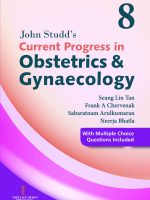
John Studd’s Current Progress in Obstetrics & Gynaecology Vol. 8
₹1,295.00In an era marked by global challenges, this volume of “John Studd’s: Current Progress in Obstetrics & Gynaecology” stands as a testament to the power of international collaboration and dedication. The contributions gathered in this volume reflect the global nature of out field, with experts from diverse backgrounds sharing their insights and research. The list of contributors includes renowned specialists from over 15 countries, including the United Kingdom, United States, India, Thailand, Israel, Australia and Italy among others. This international collaboration highlights the importance of worldwide endeavors in advancing medical knowledge and addressing global health issues. This Volume celebrates the collective efforts of numerous ObGyn experts from and covers a wide range of topics in obstetrics and Gynaecology, including epigenetics, recurrent pregnancy loss, prenatal diagnosis and therapy, uterine leiomyomas, HPV infection, palliative care, endometrial cancer, lasers in gynaecology, uterine atony, anti-phospholipid syndrome, oral progesterone therapy, simulation training, climate change impacts, and ethical issues of pregnancy.

-

Current Progress In Nephrology Volume 3
₹1,995.00In the third volume of Current Progress in Nephrology, recent advances in different areas of kidney disease have been authored by eminent clinicians. The first few chapters discuss the genetics of renal development, regenerative medicine in relation to kidney, molecular diagnostics. Newer diagnostic modalities like functional magnetic resonance imaging, point of care ultrasonography and electron microscopy of organised deposits in kidney diseases are discussed in the subsequent 3 chapters. Diagnosing and managing difficult conditions of chronic kidney disease like, hepatorenal syndrome, pregnancy related renal problems, and scleroderma crisis are discussed in appropriate chapters. Anaemia, usually associated with CKD, is a significant cause of left ventricular hypertrophy and cardiovascular disease. The guidelines for correcting anaemia with iron supplementation and erythropoietin stimulating agents are provided in an appropriate chapter. Autosomal dominant rubulointerstitial kidney disease, a frequent cause of progressive CKD often remains an underdiagnosed condition and has been highlighted in one nice review. Understanding another a rare condition, thrombotic miocroangiopathy is important since it may lead to endstage renal disease or death, if not identified and appropriately treated in time.


