Recommended Books
-
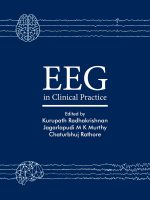
EEG in Clinical Practice
₹2,500.00EEG in Clinical Practice is a comprehensive, easy-to-read, and well-illustrated book on scalp EEG. Through the text in its 21 chapters, 553 figures, and 94 tables describes practically every aspect of the scalp EEG including pathophysiology, technical challenges, and its value and limitations in the diagnosis of epilepsy and related disorders. Some of the recent advances such as EEG monitoring in intensive care units, quantitative EEG, and high frequency oscillations are also covered. Adhering to the systematic approach to reading and interpretation of the EEG, depicted in the final chapter, may help to minimize misreading of EEG and its consequences, which is highly prevalent especially in the developing countries. Though it is targeted at neurology trainees, young practicing neurologists, and neurotechnologists, it also serves as a reference guide for all the neurologists and electrophysiologists.
-

EEG Simplified
₹1,255.00EEG Simplified is an interesting and informative book, it has been written in simple english and discusses various aspects of electrophysiology with clarity. Beginning with basic recording concepts of EEG and the descriptions of normal EEG, the authors take us through artifacts, a very important chapter and then discuss electroencephalographic abnormalities seen in variety of neurological disorders. This kind of book on clinical neurophysiology is extremely useful for day to day clinical practice.
-

EMG Simplified
₹3,250.00ABOUT THE BOOK – A concise book for practical Electroneuromyography What is it for? Electrodiagnosticians Neurology trainees Neurology practitioners Orthopedic and hand surgeons Physicians Technologists COVERS Technical as well as neurological aspects Troubleshooting paradigms Approach based on presenting symptoms Disease based discussions Considerations about the common and the uncommon Case Studies
-
-

Puzzling Cases in Stroke
₹1,250.00Stroke is the leading cause of permeant disability , including post stroke dementia, pain, depression and personality changes. While large Clinical Trials reflect information about large stroke populations, the presentation of each and every stroke patient is individual and special. Currently there are only few books which illustrate case oriented discussion. This is unique book which includes common and unusual case of stroke, so as to reinforce diagnostic skills through careful analysis of individual presenting patterns, and to guide treatment decisions.
-

Puzzling Cases in Stroke Vol. 2
₹1,695.00Stroke is a treatable medical emergency affecting about 15 million people every year worldwide. It is the most common cause of common cause of disability globally and is the third most common cause of death. In the present times, there are effective treatment options which if given timely will benefit the patients of stroke remarkably. Therefore, correct diagnosis of acute stroke is extremely important for the clinicians to provide appropriate treatments and to ensure prevention of acute complications, including recurrent strokes. But sometimes a typical or uncommon presentation of stroke or “stroke chameleons”can lead to diagnostic dilemma. Therefore, timely diagnosis and management may be delayed. There are time – tested strategies which when strictly followed by the Neurphysician can reduce the chances of missing the correct diagnosis. Firstly, “Listen very carefully to the patient. He is telling you the diagnosis.” Clinicians should suspect stroke when the history suggests abrupt onset of neurological symptoms. Remember, Stroke is a clinical diagnosis and imaging is providing the corroboratory evidence. Secondly, a complete and systematic neurological examination should be routinely done in patients presenting with acute neurological symptoms because this might shed light on the true nature of the problem. Finally, even the most sophisticated neuroimaging tests might miss the stroke in the early hours after the event.

-