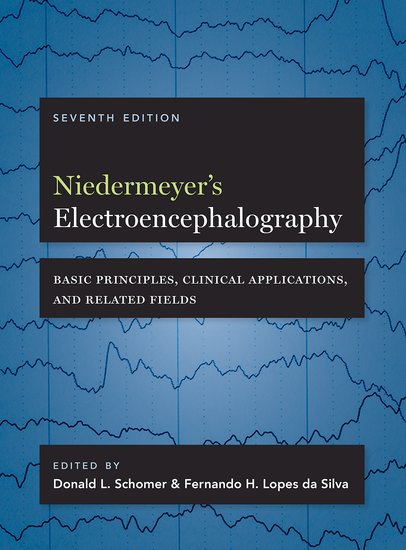
Niedermeyer’s Electroencephalography: Basic Principles, Clinical Applications, and Related Fields
₹47,142.00
Niedermeyer’s Electroencephalography: Basic Principles, Clinical Applications, and Related Fields, Seventh Edition keeps the clinical neurophysiologist on the forefront of medical advancements. This authoritative text covers basic neurophysiology, neuroanatomy, and neuroimaging to provide a better understanding of clinical neurophysiological findings. This edition further delves into current state-of-the-art recording EEG activity both in the normal clinical environment and unique situations such as the intensive care unit, operating rooms, and epilepsy monitoring suites. As computer technology evolves, so does the integration of analytical methods that significantly affect the reader’s interpretations of waveforms and trends that are occurring on long-term monitoring sessions. Compiled and edited by Donald L. Schomer and Fernando H. Lopes da Silva, along with a global team of experts, they collectively bring insight to crucial sections including basic principles of EEG and MEG, normal EEG, EEG in a clinical setting, clinical EEG in seizures and epilepsy, complementary and special techniques, event-related EEG phenomena, and shed light on the future of EEG and clinical neurophysiology. Akin to an encyclopedia of everything EEG, this comprehensive work is perfect for neurophysiology fellows, as well as neurology, neurosurgery, and general medical residents, and for the interns and medical students, and is a one-stop-shop for anyone training in EEG or preparing for neurophysiology or epilepsy board exams.
Related products
-

Puzzling Cases in Stroke Vol. 2
₹1,695.00Stroke is a treatable medical emergency affecting about 15 million people every year worldwide. It is the most common cause of common cause of disability globally and is the third most common cause of death. In the present times, there are effective treatment options which if given timely will benefit the patients of stroke remarkably. Therefore, correct diagnosis of acute stroke is extremely important for the clinicians to provide appropriate treatments and to ensure prevention of acute complications, including recurrent strokes. But sometimes a typical or uncommon presentation of stroke or “stroke chameleons”can lead to diagnostic dilemma. Therefore, timely diagnosis and management may be delayed. There are time – tested strategies which when strictly followed by the Neurphysician can reduce the chances of missing the correct diagnosis. Firstly, “Listen very carefully to the patient. He is telling you the diagnosis.” Clinicians should suspect stroke when the history suggests abrupt onset of neurological symptoms. Remember, Stroke is a clinical diagnosis and imaging is providing the corroboratory evidence. Secondly, a complete and systematic neurological examination should be routinely done in patients presenting with acute neurological symptoms because this might shed light on the true nature of the problem. Finally, even the most sophisticated neuroimaging tests might miss the stroke in the early hours after the event.

-

Current Progress In Nephrology Volume 3
₹1,995.00In the third volume of Current Progress in Nephrology, recent advances in different areas of kidney disease have been authored by eminent clinicians. The first few chapters discuss the genetics of renal development, regenerative medicine in relation to kidney, molecular diagnostics. Newer diagnostic modalities like functional magnetic resonance imaging, point of care ultrasonography and electron microscopy of organised deposits in kidney diseases are discussed in the subsequent 3 chapters. Diagnosing and managing difficult conditions of chronic kidney disease like, hepatorenal syndrome, pregnancy related renal problems, and scleroderma crisis are discussed in appropriate chapters. Anaemia, usually associated with CKD, is a significant cause of left ventricular hypertrophy and cardiovascular disease. The guidelines for correcting anaemia with iron supplementation and erythropoietin stimulating agents are provided in an appropriate chapter. Autosomal dominant rubulointerstitial kidney disease, a frequent cause of progressive CKD often remains an underdiagnosed condition and has been highlighted in one nice review. Understanding another a rare condition, thrombotic miocroangiopathy is important since it may lead to endstage renal disease or death, if not identified and appropriately treated in time.
-
Dermatological Diseases A Practical Approach 3/Ed. – Revised & Updated
₹1,595.00Dermatology has grown much since the release of the second edition, with several advances in different fields suchh as lasers, biologics, drug therapy, dermoscopy. But the most notable change has been the change in profile, with emphasis on procedural dermatology and visibility on social media. The new 3 rd Edition reflects these changes and is therefore a thoroughly revised edition. Several new images have been added to make it more illustrative. However, the emphasis on clarity in a reader- friendly manner. Therefore the emphasis on text boxes, schematic diagrams, and flow charts continues. A new addition is the list of suggested reading, MCQs and case reports for each chapter. The Following quote form previous edition is still relevant: Writing of a book is like sawing a saw- it sharpens the mind and freshens the knowledge and is thus a process that gives immense satisfaction and joy. This satisfaction and joy will be greater if the readers too find it a valuable tool to enhance their knowledge.
-

CARDIAC MRI Simplified CONCISE GUIDE
₹625.00Who Will benefit from this book? * Genuine interest in cardiovascular imaging * International certification exams * Enhancing skills in interpretations of cardiac MR Why this format? * Salient points, easier and faster to read. * Questions-answer approach for better understanding of topic. * Short and well contained guide. What are the highlights of the book? * Comprehensive coverage of all topics * Appropriate illustrations * Inclusion of recent advances
-

COVID – 19 VACCINES A Comprehensive Overview
₹1,595.00We are amid a pandemic that continues to smoulder almost everywhere with raging fire off and on at different places. It has not only devastated hundreds of thousands of families who lost someone to the virus and affected over 300 million people directly, it has affected all 7.9 billion of us in some way or other. At the same time, humanity has risen well to the pandemic challenges. It was realized very early during the current outbreal that safe and effcacious vaccines would be crucial in tackling the pandemic. The unprecedented global collaboration among all stakeholders: Scientists, pharmaceutical industry, funding agencies and Governments demonstrated what a global will could do: hundreds of vaccine candidates developed, and vaccine deployment started within 12 months of isolation of new virus something that takes over a decade otherwise.

-

Grand Rounds in Nephrology
₹2,295.00Thirty-six different case scenarios including clinical nephrology, dialysis and kidney transplantation have been discussed in this volume. Each case scenario is followed by a focussed discussion on a selected aspect in a question answer format. For this issue, eminent nephrologists from all over India have contributed and shared their vast knowledge and experience. This book will be useful to the residents in Nephrology who are preparing to take the examination as well as clinical nephrologists to revise and update their knowledge and skills. Training and ability to present the available data clearly and answering questions with reasonable self-assurance is important when taking a clinical examination or viva-voce. The cases selected are broad based, covering kidney diseases in children, glomerular diseases, non-glomerular kidney diseases, genetic disorders, acute kidney injury, chronic kidney disease, electrolyte abnormalities, dialysis and transplant related clinical scenarios.
-

Puzzling Cases in Pediatric Dermatology Volume 1
₹995.00The book covers 30 Unique Cases in Pediatric Dermatology written by some of the Leading Experts. The book would be highly useful to all Dermatologists, Pediatricians, Consulting Physicians, Post Graduate Students and those interested in treating Children with Dermatological Conditions